The Churchill Complex: The Curse of Being Special, From Winston and FDR to Trump and Brexit by Ian Buruma
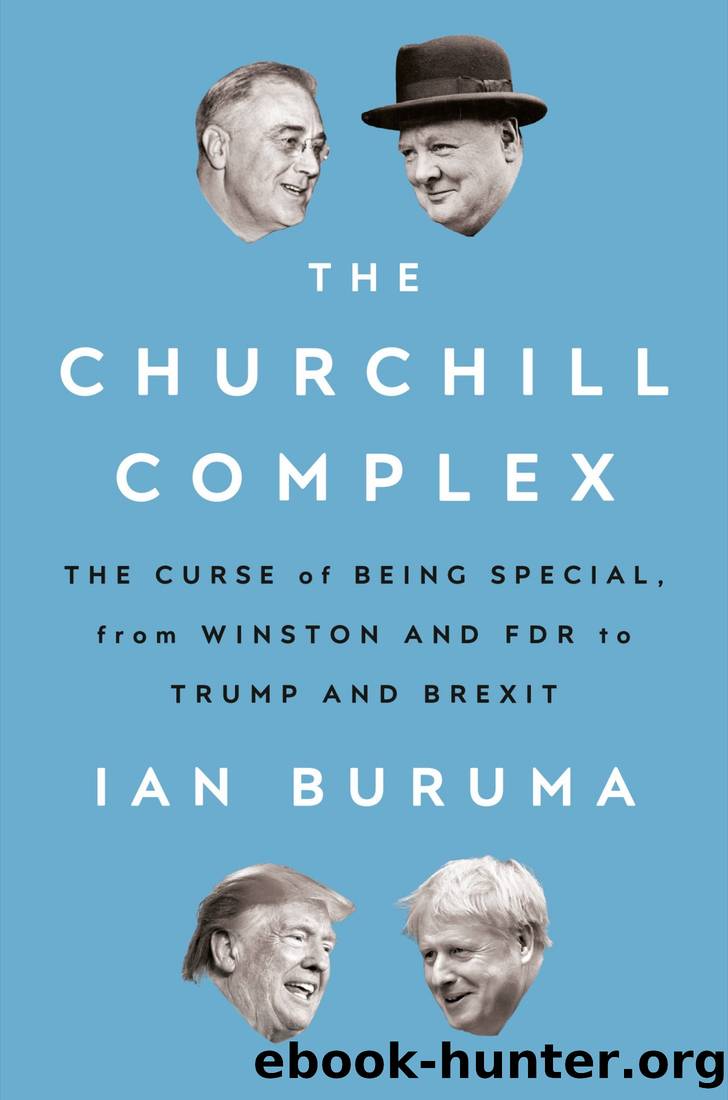
Author:Ian Buruma
Language: eng
Format: mobi, azw3
ISBN: 9780525522225
Publisher: Penguin Publishing Group
Published: 2021-09-06T15:00:00+00:00
* * *
â
The tiny island of Grenada, in the eastern Caribbean, was no longer a British colony but an independent member of the Commonwealth. In 1979, a Marxist agitator named Maurice Bishop took power in a revolution. The Americans suspected him of serving the interests of Cuba and the Soviet Union. In 1983, a military faction in Bishopâs party deposed the leader, shot him, and then cut his throat. Several Caribbean nations asked the US to intervene. Without bothering to inform the British, Reagan ordered a military invasion, named Operation Urgent Fury. Securing this tiny tropical outpost was hailed by the US administration as a great victory. One of Reaganâs men exulted. âGrenada showed that it could be done. It proved that boldness and determination could defeat Communists.â25
One reason the US much needed a boost to its morale was a debacle in Beirut, where the US had stationed troops to bolster the Lebanese government under a Christian president during the brutal civil war. A week after Bishop was overthrown in Grenada, Islamist suicide bombers murdered 241 US servicemen, a humiliating blow to the Reagan administration. Then there was the so-called Vietnam Syndrome, the perception among American hawksâcommonly known as âneoconservatives,â who would do so much damage later onâthat the US had gone soft after âlosingâ Vietnam and years of détente. It was time for the US to show âresolve.â Grenada was an opportunity to do so.
But Operation Urgent Fury showed how illusory the Special Relationship, which Thatcher, for some reason, had renamed the âextraordinary relationship,â often proved to be. Since the British had not been told about the invasion in advance, the foreign secretary, Geoffrey Howe, made a fool of himself by assuring Parliament that such an action was unlikely to take place. The prime minister was accused of letting the president treat her like a doormat or, in the words of Denis Healey, the shadow foreign secretary, âan obedient poodle.â26 She later expressed her dismay: âAt best, the British Government had been made to look impotent; at worst we looked deceitful.â27
In fact, Thatcher had not been in favor of any military action at all. This struck the Americans as ungrateful, even perverse, after all the help she had been given over the Falklands. But Thatcher argued, with some reason, that the Falklands conflict was a defensive war against an invasion, whereas Grenada was invaded to change a regime, and not a very important one at that. What made it all more awkward was that the queen was Grenadaâs head of state. Thatcher didnât really believe that Grenada was about to become another Cuba, or that Bishopâs killers were any worse than Bishop had been. But in the end Thatcher was philosophical about the affair. She told her adviser George Urban that the US had done Britain a disservice in Grenada, but she âhad learnt to think that this is how very large powers behave. Morality does not really come into the picture. The more the pity.â28
(In fact, the regime change in Grenada turned out to be a success.
Download
The Churchill Complex: The Curse of Being Special, From Winston and FDR to Trump and Brexit by Ian Buruma.azw3
This site does not store any files on its server. We only index and link to content provided by other sites. Please contact the content providers to delete copyright contents if any and email us, we'll remove relevant links or contents immediately.
| Arms Control | Diplomacy |
| Security | Trades & Tariffs |
| Treaties | African |
| Asian | Australian & Oceanian |
| Canadian | Caribbean & Latin American |
| European | Middle Eastern |
| Russian & Former Soviet Union |
The Secret History by Donna Tartt(19105)
The Social Justice Warrior Handbook by Lisa De Pasquale(12197)
Thirteen Reasons Why by Jay Asher(8920)
This Is How You Lose Her by Junot Diaz(6894)
Weapons of Math Destruction by Cathy O'Neil(6285)
Zero to One by Peter Thiel(5808)
Beartown by Fredrik Backman(5768)
The Myth of the Strong Leader by Archie Brown(5513)
The Fire Next Time by James Baldwin(5454)
How Democracies Die by Steven Levitsky & Daniel Ziblatt(5225)
Promise Me, Dad by Joe Biden(5157)
Stone's Rules by Roger Stone(5091)
A Higher Loyalty: Truth, Lies, and Leadership by James Comey(4967)
100 Deadly Skills by Clint Emerson(4932)
Rise and Kill First by Ronen Bergman(4797)
Secrecy World by Jake Bernstein(4756)
The David Icke Guide to the Global Conspiracy (and how to end it) by David Icke(4724)
The Farm by Tom Rob Smith(4517)
The Doomsday Machine by Daniel Ellsberg(4493)
